




Shakespeare and Translation
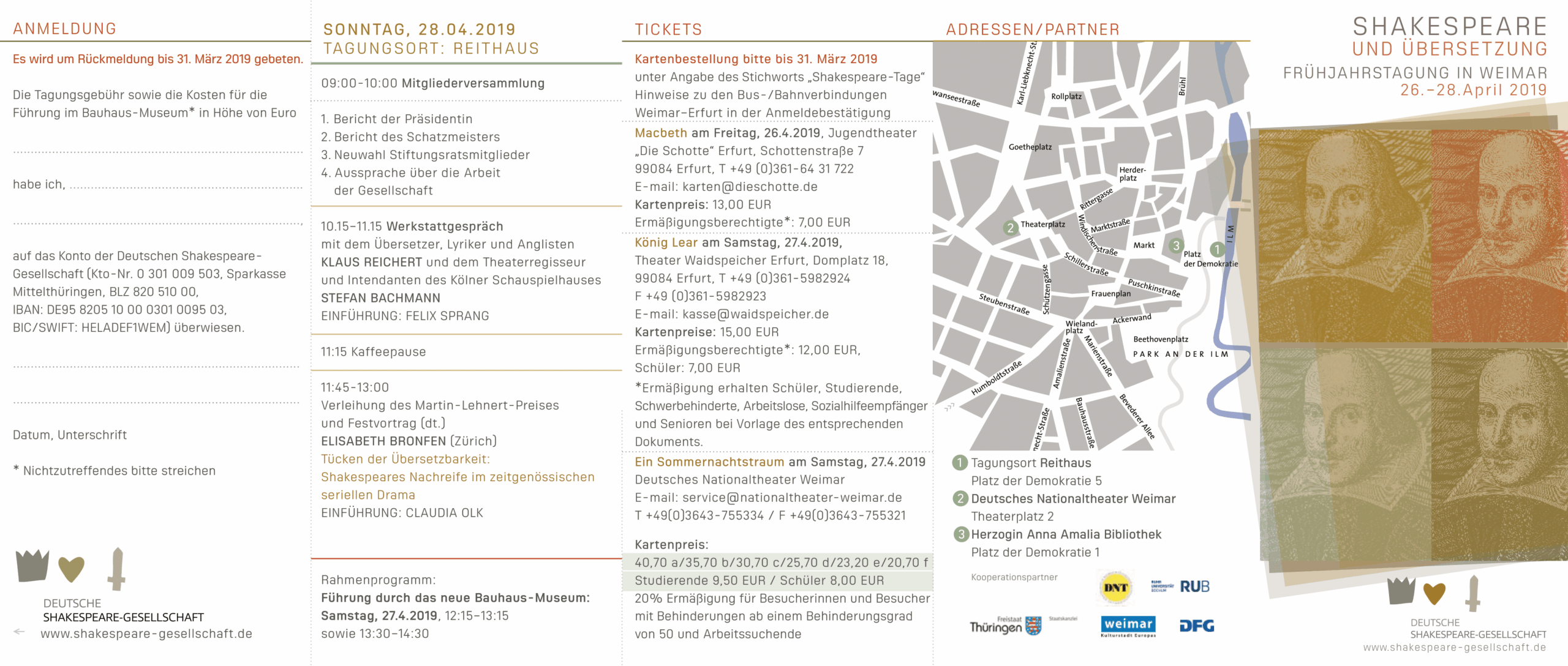

The conference on “Shakespeare and Translation” takes a twofold approach. On the one hand, it looks historically at the translation theories and practices of Shakespeare’s time, which is characterised more than almost any other epoch by its translation activity. English literature in particular occupies a special position among the cultural areas of Europe during the Renaissance. While the significance of English is only marginal from a pan-European perspective and in comparison to other European languages, it is precisely this circumstance that led to England importing texts from abroad by means of translation and thus playing a decisive role in the European ‘market of ideas’ (see Gabiela Schmidt’s introduction to Elizabethan Translation and Literary Culture, 2013).
The influence exerted by these translations ranges from a change in vocabulary to the establishment of new genres and styles. In terms of motifs and the history of ideas, not only the rediscovery and establishment of ancient writings, but also the Bible translations of Martin Luther and William Tyndale characterised the cultural self-image of the 16th and 17th centuries. These translations laid the foundations for the political and confessional upheavals of the early modern period.
The complex interplay of translation, literature, aesthetics, politics and knowledge culminates in the works of Shakespeare and can be traced like hardly any other work due to their textual dynamics, intertextual references and long tradition of reception. The study and discussion of his dramatic and lyrical texts thus opens up a transnational perspective on European literature, in which material, motifs and ideas transcend linguistic and national borders.
The conference will also examine contemporary forms and functions of translations, which are also understood in a broad sense as adaptations, interpretations and stagings. Here too, Shakespeare’s work offers an enormous variety of forms, continuity over time and at the same time innovative power like hardly any other. Shakespeare’s works are constantly being translated, rethought and transformed, particularly by means of new media adaptation and staging practices of the 20th and 21st centuries. In conversation with translators, the lectures and discussions at the conference will examine the treatment of Shakespeare’s texts in the context of a globalised world and a resurgence of national particular interests. The question of which linguistic and rhetorical procedures translations work with and which goals can or should be pursued with them will take centre stage.
Here you can download the Flyer and Programme and the President’s Invitation.